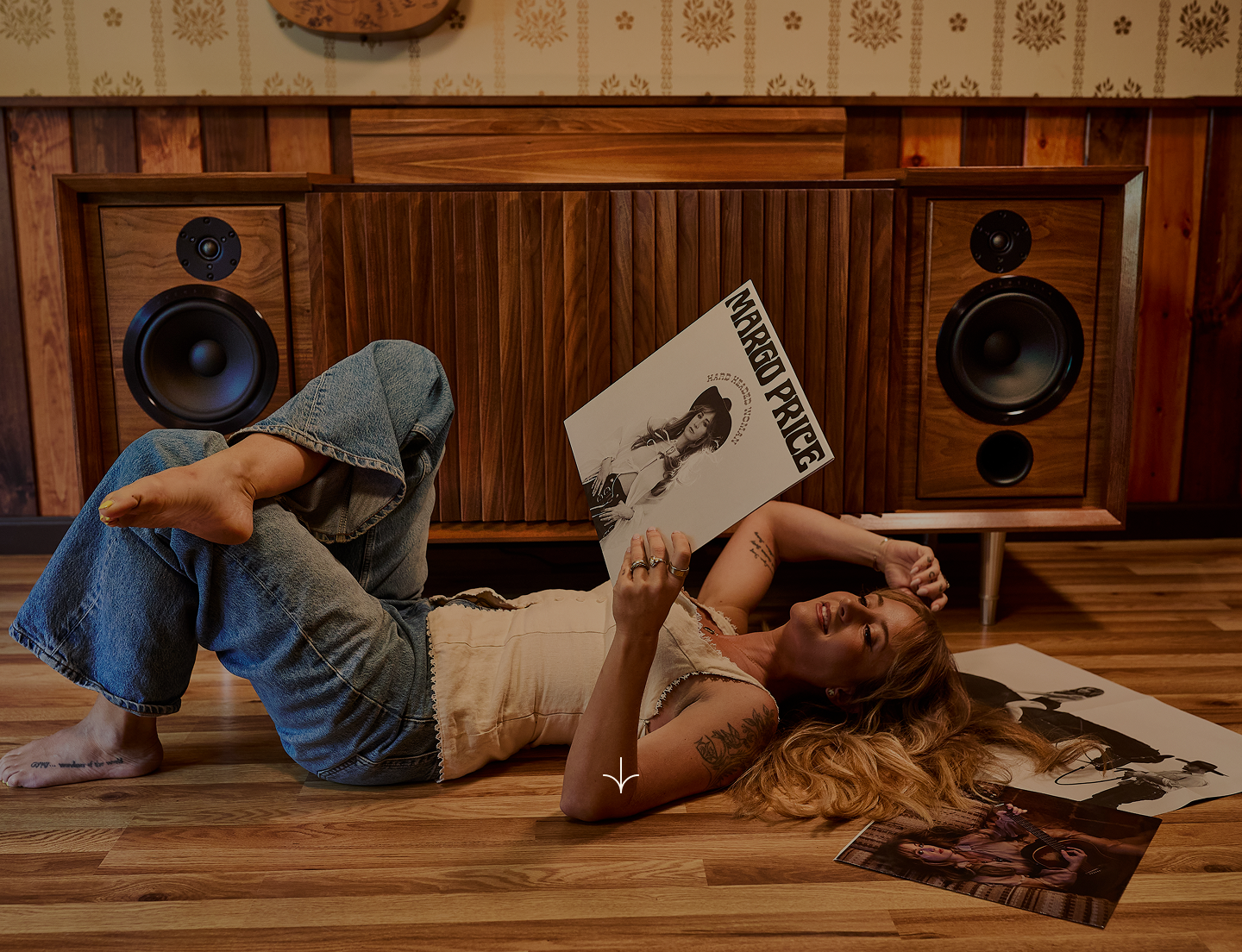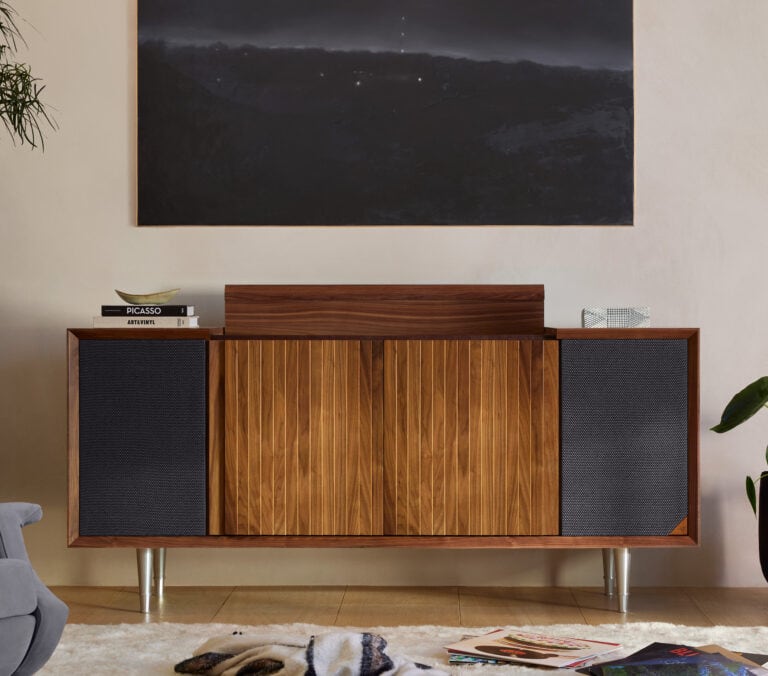


As part of our ongoing series, Wrensilva Presents at California Surf Club, we invited longtime KCRW music director and Grammy-nominated producer Jason Bentley to curate a listening session on the albums that, to him, define Los Angeles. Armed with personal stories, archival photos, and a reverence for music’s deeper layers, Bentley brought the audience through the ‘60s, ‘70s, and ‘80s of Los Angeles music history.

The Beach Boys – Pet Sounds (1966)Bentley began with The Beach Boys’ 11th album, Pet Sounds, calling it “revolutionary” for its orchestral arrangements, layered instrumentation, and groundbreaking use of the studio as an instrument, opening up a whole new standard of imagination for pop music during that time.
“The mythology that the Beach Boys created—their legacy of West Coast, Southern California youth—has become part of the identity of LA itself.” - Jason Bentley
He chose the track, “I Just Wasn’t Made for These Times” to illustrate that sentiment. He also shared insight into the lesser-known, behind-the-scenes contributors, like The Wrecking Crew, the legendary group of studio musicians who played on much of the album instead of the band itself.
Love – Forever Changes (1967)Next came Forever Changes by Love, the psychedelic group led by Arthur Lee, a South LA native. With roots in the Crenshaw District and deep ties to the Sunset Strip scene, the album captured the complex social atmosphere of the late ‘60s. Lee enlisted Pet Sounds engineer Bruce Botnick to produce and mix the record at the same studio, drawing clear influence from the Beach Boys’ orchestral chamber pop. Bentley pointed to “The Red Telephone” as a song that feels as relevant today as it did during the counterculture-era clashes from the 60s, like the Sunset Strip curfew riots that partially inspired it.
“Forever Changes is a gift that keeps on giving. “You listen, and then you think about it, and listen again.”


American rock band Steely Dan in 1973 Photo by Michael Ochs Archives / Getty Images.

The Doors – L.A. Woman (1971)With L.A. Woman, The Doors stepped away from Sunset Sound, the recording space that birthed Pet Sounds and Forever Changes. Instead, they chose to record in their own rehearsal space. The shift marked a move away from the orchestral chamber pop trend that had dominated the era, embracing something more raw and visceral.
This record was the band’s sixth album and final one with Jim Morrison before he passed. It was also their first without longtime producer Paul Rothchild, who was replaced by the same Bruce Botnick, who had engineered Pet Sounds and Forever Changes.
Bentley, a longtime Venice resident, reflected on the spirit of the record by imagining Morrison pacing the boardwalk—feral, poetic, and deeply tied to the city’s soul.
The studio where L.A. Woman was recorded on Santa Monica Boulevard is now Tail O’ The Pup, a hot dog stand, with only a plaque left to mark where The Doors created magic.
Steely Dan – Aja (1977)Bentley turned next to the pristine jazz-pop of Aja (1977) by Steely Dan, the first album to be recorded at The Village in West LA. Donald Fagen, Steely Dan’s lead singer, leaned heavily on collaborators during recording. Throughout the album, Michael McDonald of the Doobie Brothers lends his iconic voice to the backing vocals.


A plaque at Tail o' the Pup hot dog stand commemorating The Doors. Photo by Craig Baker

Fleetwood Mac – Tusk (1979)Fleetwood Mac’s Tusk was recorded at The Village two years after Aja. The record was the highly anticipated follow-up to Rumours, but Lindsey Buckingham had no interest in making Rumours II. He pushed the band into more experimental territory, and with the largest album budget ever at the time, they custom-built a studio at The Village to suit their exacting and often eccentric needs—Studio D. That space went on to become a major hub for film scoring, known for its massive multi-channel mixing consoles. Some of the biggest soundtracks in history were mixed there, including The Bodyguard, Dirty Dancing, and The Shawshank Redemption.
“Tusk reflected some of the darker, more self-indulgent parts of LA,” Bentley said. “It was bloated, chaotic—but also daring.”
Bentley played the title track “Tusk”, pointing out its use of the USC marching band.
X – Los Angeles (1980)Punk band X’s debut Los Angeles was produced by Ray Manzarek of The Doors. Bentley explains that the album served as a lightning rod for LA’s burgeoning punk scene—connecting the counterculture of the ’60s with the raw energy of the ’80s, which is something that opened the door for a lot of other local bands, liked Black Flag, Circle Jerks, T.S.O.L, Germs, and Minutemen.
“[Los Angeles] absolutely leaps off of the vinyl.”


LEFT: Village Recorders located on Santa Monica Boulevard where Tusk by Fleetwood Mac was recorded. RIGHT: '80s punk band, X.

SUNSET SOUND RECORDING STUDIO WHERE PET SOUNDS BY THE BEACH BOYS AND FOREVER CHANGES BY LOVE WAS RECORDED. PHOTO BY MILES BITTON
Bentley closed the session by naming a handful of honorable mentions: Jane’s Addiction’s Nothing’s Shocking, Beck’s Odelay, Beastie Boys’ Check Your Head, and the undeniable influence of hip-hop landmarks like N.W.A.’s Straight Outta Compton and Snoop Dogg’s Doggystyle. Bentley showed that the story of LA music doesn’t sit still. It mutates, reinvents, and remixes itself constantly. In tracing this musical lineage, Bentley reminded us that Los Angeles isn’t defined by one genre or era, but by its openness to experimentation, collaboration, and cultural collision, a city where sound has shaped identity.